
I spend much of my professional life helping organizations think critically about inclusion. Whether I’m working with healthcare systems, schools, nonprofits, or workplaces, the questions are often different, but the underlying challenges are remarkably consistent.
Over time, one truth has become increasingly clear. We often mistake visibility for inclusion and representation for equity.
The LGBTQIA+ community has never been a single voice, nor should it be. It is made up of people with different races, cultures, gender identities, sexual orientations, socioeconomic backgrounds, faiths, disabilities, and life experiences. Yet public conversations often elevate a small number of voices and unintentionally treat them as the token and representative of an entire community. Visibility matters. Representation matters. But they are not the same as inclusion.
I’ll never forget several conversations I had a few years ago. People who were all middle-aged, white, cisgender gay men messaged me to tell me they believed that pushing for broader LGBTQIA+ inclusion would “ruin it” for them. The comments stayed with me not because they were directed at me personally, but because of what they revealed. It exposed a tension that exists within many communities that want progression. The fear that expanding inclusion somehow diminishes those who have already gained acceptance. The reality is the opposite. Inclusion is not a finite resource. Creating space for more voices does not take space away from existing ones. It strengthens the movement by ensuring it reflects the diversity of the people it claims to represent.
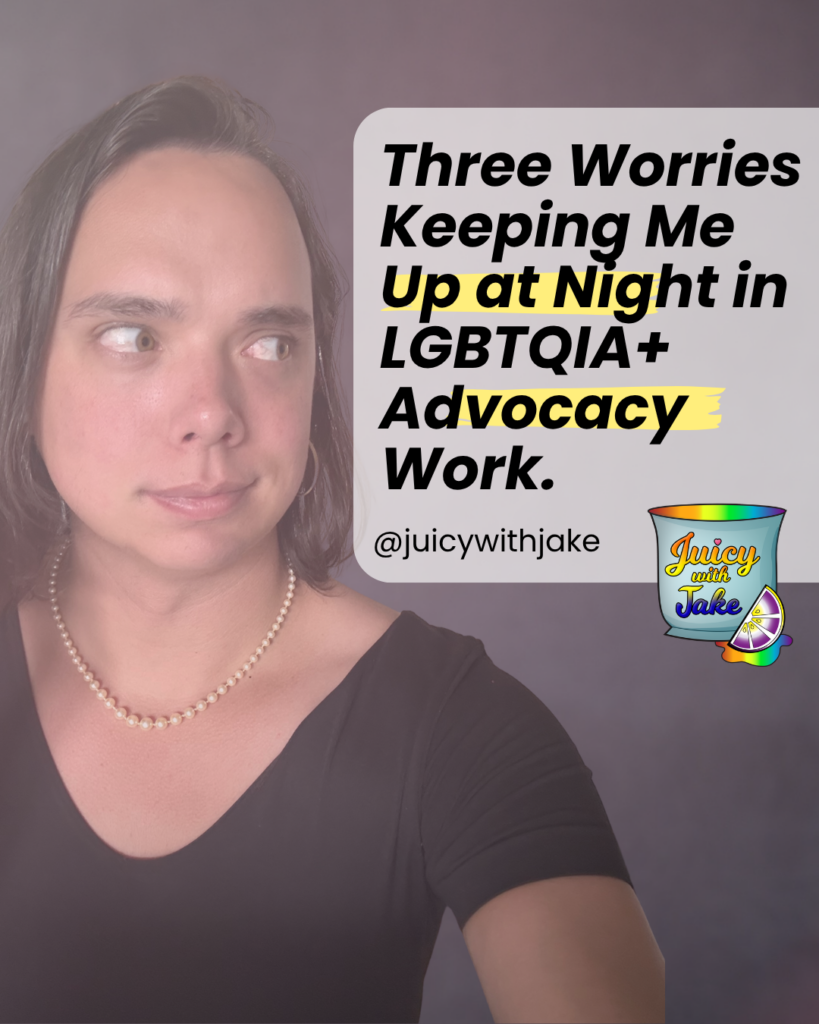
That conversation has stayed with me throughout my work as an educator and consultant because it highlights three challenges I continue to see across organizations and communities alike.
1. We keep confusing visibility with representation
It’s easy to walk away from a single panel, a single hire, or a single high-profile voice and assume the community’s needs have been addressed. They haven’t. The people who are easiest to platform are often the people whose identities are easiest for the mainstream to accept, and that’s precisely why their experiences can’t stand in for everyone else’s.
The louder a handful of voices get, the more tempting it is to stop asking who’s still missing from the room. True representation requires more than inviting someone to the table. It requires asking who wasn’t invited, who didn’t feel safe enough to attend, and whose experiences continue to be overlooked because they challenge our assumptions.
2. Privilege inside the community gets glossed over
This conversation often makes people uncomfortable, but it shouldn’t. Privilege is not limited to a majority-versus-minority dynamic; it is contextual, and it exists within LGBTQIA+ communities as well.
Not every LGBTQIA+ person encounters the same barriers. Some can navigate workplaces, healthcare systems, housing, and public spaces with relatively little scrutiny of their identity. Others cannot. Race, gender expression, disability, socioeconomic status, and other intersecting identities can significantly shape how someone is perceived, treated, and protected.
Ignoring these differences does not create unity. It obscures inequity.
Recognizing privilege within our own community is not about assigning blame or ranking oppression. It is about understanding that the people with the greatest visibility are not always the people facing the greatest barriers. If our advocacy only reflects the experiences of those who encounter the fewest obstacles, we risk leaving the most marginalized voices to carry the heaviest burden of explaining why inclusion still matters.
3. Opinion is crowding out evidence
Strong movements are not built by eliminating disagreement. They are built by creating space for honest dialogue, intellectual curiosity, and a willingness to learn. Too often, the question guiding difficult conversations is, “What do you think?” instead of, “What does the evidence show?” That distinction matters. Research on psychological safety, belonging, and organizational effectiveness consistently demonstrates that better outcomes emerge when organizations intentionally seek diverse perspectives rather than relying on a single narrative or the loudest voice in the room.
Disagreement is not the problem. Dismissal is. When perspectives are ignored simply because they complicate our understanding of the community, we stop practicing inclusion and begin protecting narratives. Advocacy grounded only in personal opinion can unintentionally reproduce the very blind spots it seeks to challenge. Two truths can exist, but that means you have to acknowledge the reality and discomfort that brings.
Lived experience is essential, but no single lived experience is universal. Likewise, research without lived experience lacks context. Effective advocacy requires both the evidence to understand broader patterns and the humility to recognize that our own perspective is only one part of a much larger story.
Whether we are educators, advocates, organizational leaders, or community members, our responsibility is not to speak the loudest. It is to ask better questions, remain open to new evidence, and ensure that the voices least likely to be heard are still part of the conversation.
What I think this calls for
If we are serious about creating affirming communities and equitable organizations, our advocacy must become more intentional.
That means:
- Recognizing that visibility is not the same as representation.
- Acknowledging that privilege exists within marginalized communities and influences whose voices are amplified.
- Grounding difficult conversations in research, evidence, and professional expertise rather than assumptions or popularity.
- Treating disagreement as an opportunity for learning instead of a threat to manage.
- Actively seeking the perspectives that are hardest to hear, not simply the ones that are easiest to platform.
- Measuring success by whether those facing the greatest barriers are seen, supported, and empowered, not by how comfortable the most visible members of the community feel.
The LGBTQIA+ community has never been defined by one story.
Neither should our advocacy.
The strength of any movement of change is not measured by how well its most visible members are represented. It is measured by whether everyone has a way in, whether every voice has an opportunity to be heard, and whether our commitment to inclusion extends beyond those whose experiences are easiest for society to accept.
That is what meaningful advocacy demands, and that is the standard we should continue striving toward. The strength of any progression isn’t how well its most visible members are represented. It’s whether everyone actually has a way in.